
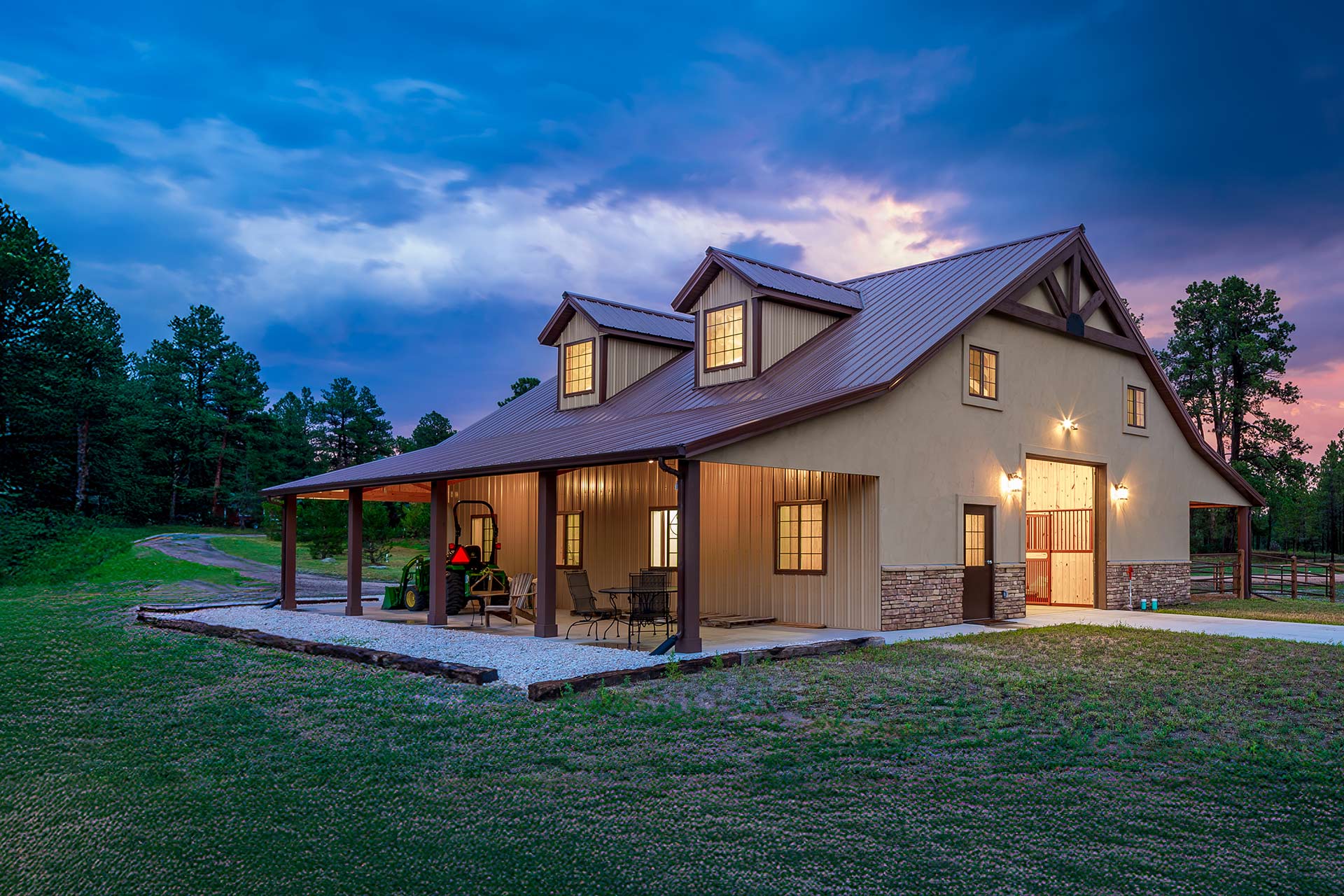
Building a custom horse barn is different than building a traditional garage or shop. Every horse owner has unique needs, whether it’s stall layouts, tack storage, wash stalls, trailer parking, insulation, or room for future expansion.
At Sapphire Construction, every horse barn we build is custom designed around how our clients plan to use it. Below are some of the most common questions we receive from horse owners throughout Douglas and Elbert County.
1. What size horse barn should I build?
There isn’t a one-size-fits-all answer. The right size depends on the number of horses you own today, but it’s also important to think about how your needs may change in the future.
When planning a horse barn, consider:
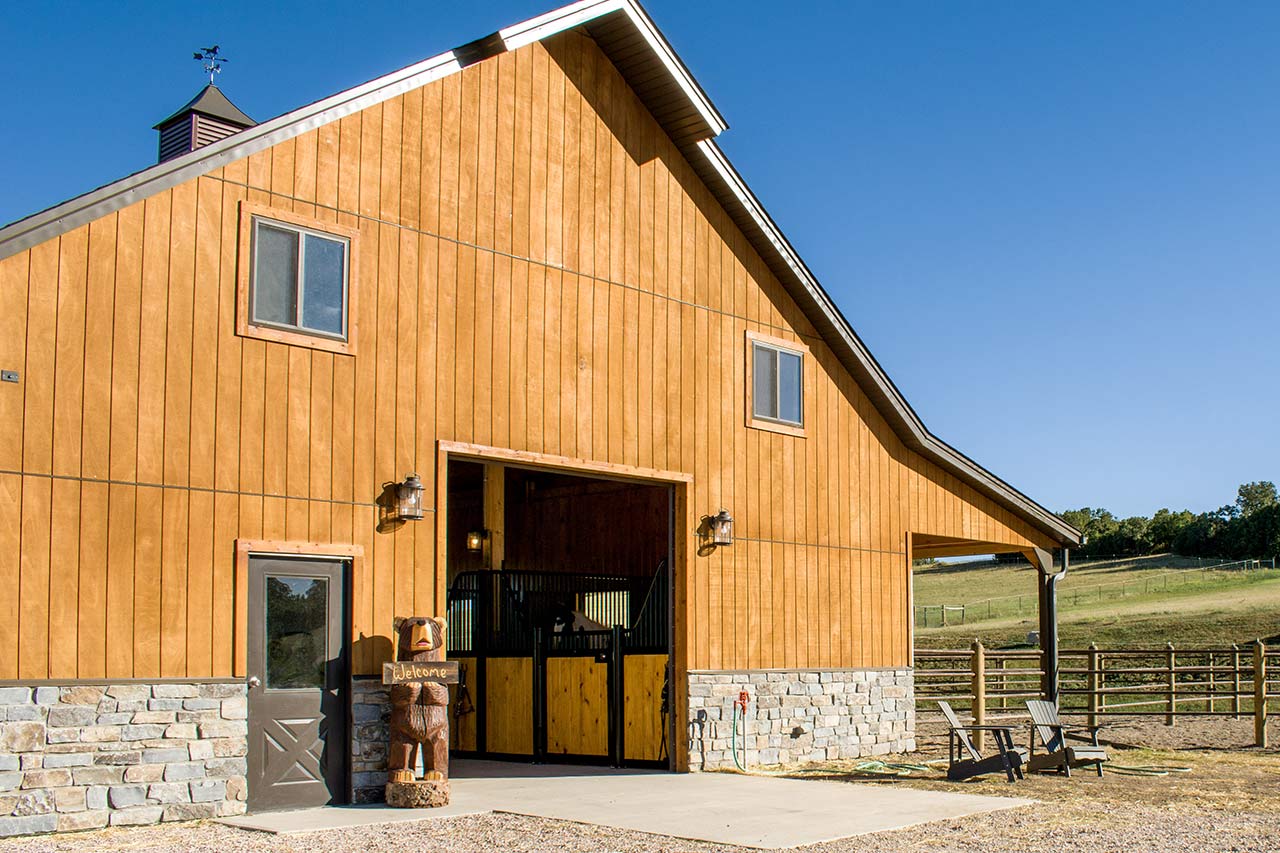
Custom horse barn in Franktown, CO.
- Number of stalls
- Loft or no loft?
- Tack room
- Feed storage
- Wash stall
- Grooming area
- Trailer parking
- Hay storage
- Equipment storage
- Future horses
One of the biggest mistakes we see is building too small. Expanding later is often much more expensive than building slightly larger from the beginning.
2. Should I insulate my horse barn?
For many horse owners in Colorado, insulating a horse barn is a worthwhile investment.
Insulation helps reduce temperature swings throughout the year while creating a more comfortable environment for both horses and their owners. It can also significantly reduce the noise inside the barn during heavy rain or hail, making the space quieter and more enjoyable to work in.
For the safety of the horses, we recommend installing a durable interior wall finish, such as tongue-and-groove wood, in all horse stalls. Most of our clients choose to install insulation between the structural framing and the interior wall finish at the same time, creating a more comfortable and finished barn from the start.
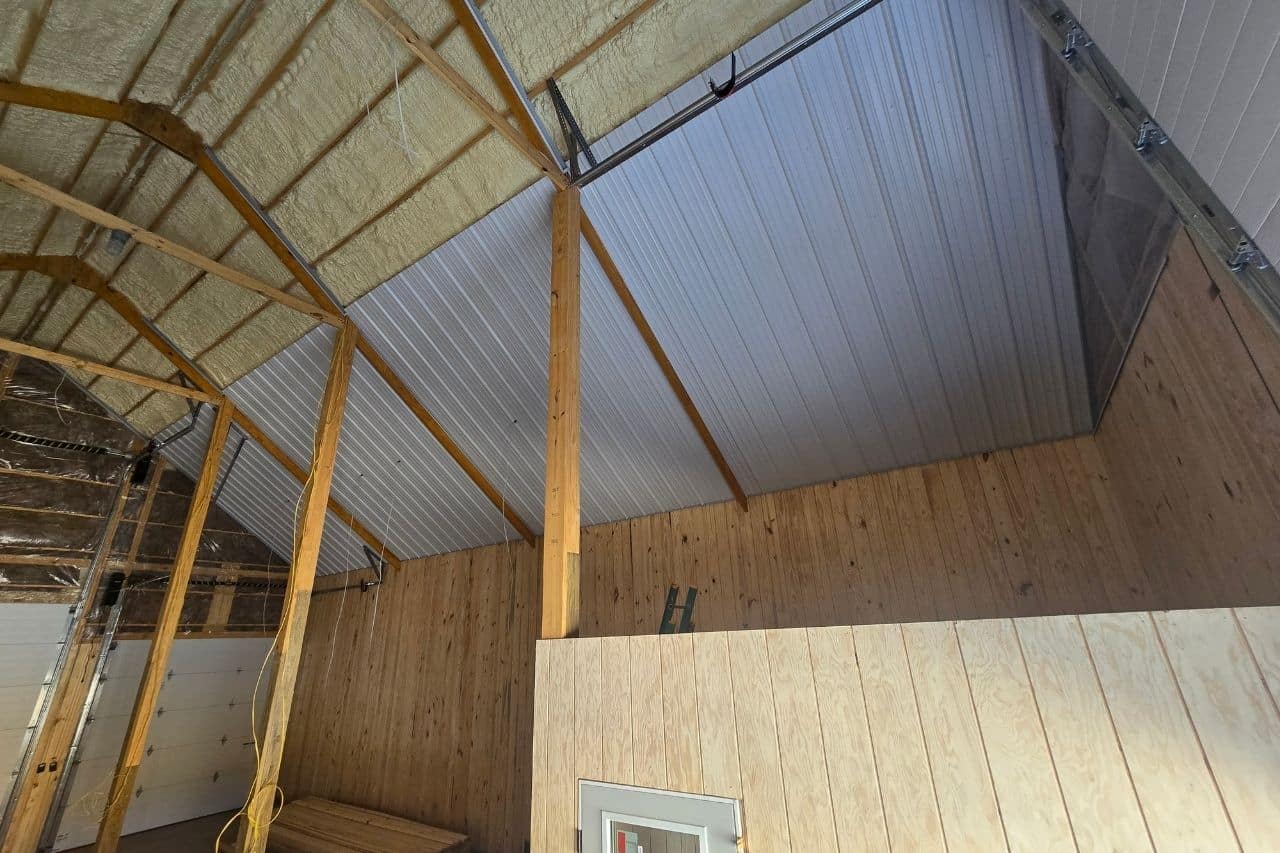
Progress photo of horse barn in Castle Rock, CO with tongue and groove on walls and metal liner
Some owners choose to fully insulate both the walls and ceiling during the initial construction, while others prefer to complete portions of the insulation and interior finishes later as their budget or needs evolve.
One important consideration is that insulation and ventilation should always work together. Features such as vented ridge caps, vented soffits, and keeping doors open during mild weather all help promote healthy airflow throughout the barn. During Colorado’s colder months, insulation can help moderate temperature swings and retain some of the warmth generated naturally within the barn, while proper ventilation helps remove excess moisture and maintain healthier air quality for both horses and owners.
The goal is not to create an airtight building. A properly designed horse barn should allow fresh air to circulate year-round while using insulation to improve comfort and reduce condensation. When insulation and ventilation are designed to work together, the barn performs better throughout Colorado’s changing seasons.
Popular insulation systems include:
- Spray foam insulation
- Batts insulation
- WMP-VR insulation systems
Every horse barn is different, so we’ll help you choose the insulation package that best fits your intended use, budget, and long-term goals.
3. What type of horse stalls should I choose?
Horse stalls come in many different styles and configurations, and the right choice depends on both your horses and how you plan to use your barn.
At Sapphire Construction, all of our horse stalls are custom built by Stablemaster in Parker, Colorado. This allows each client to customize their barn with the stall features that best fit their operation, including:
- Stall door styles
- Grill partitions and dividers
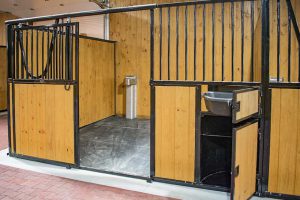
Stablemaster stalls in Elbert County horse barn
- Stall sizes
- Powder-coated metal color options
- Feed door options
- Sliding or hinged doors
- Custom layouts
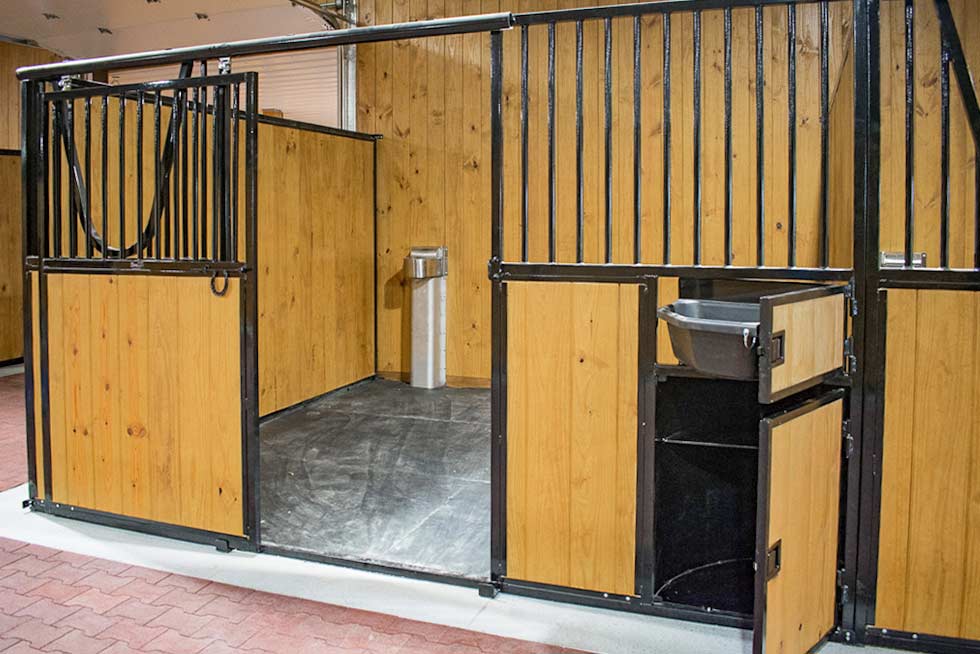
When designing your horse barn, we consider several factors, including:
- Horse breed
- Number of horses
- Preferred stall size (many clients choose 12′ × 12′ stalls, while others prefer larger configurations)
- Daily chore routine and common function of the stalls (like for foaling or quarantining)
- Future flexibility and expansion
Because every horse owner uses their barn differently, we work closely with each client to design a stall layout that is safe, functional, and built around their horses’ specific needs.
4. Why do many horse owners choose tongue-and-groove walls?
Tongue-and-groove wood is a popular interior finish because it creates a warm, finished appearance while providing a durable wall surface. In horse stalls, tongue-and-groove also provides a durable finished surface that helps protect the insulated wall assembly behind it. Because horses naturally lean, rub, and occasionally kick walls, many owners appreciate the additional durability and finished appearance.
5. What flooring should I use inside a horse barn?
Different areas of the barn often require different flooring materials.
Common choices include:
- Concrete (for aisles/tack/wash)
- Rubber aisle pavers
- Crusher fines for stall interiors underneath stall mats and in exterior runs
Concrete is commonly used in barn aisles, wash stalls, and tack rooms because it is durable and easy to clean. In each horse barn we build, we also install an equipotential plane beneath the concrete aisle as required by electrical code. This grounding system is designed to help minimize voltage differences that can occur around the barn, creating a safer environment for both horses and their owners . For horse stalls, we generally recommend a compacted crusher fines base topped with quality stall mats to provide better comfort and support for the horses. Planning these areas early allows the building to function better and makes everyday chores much easier.
6. Is a wash stall worth adding?
Many horse owners consider a wash stall one of the most valuable features in a custom barn.
A properly designed wash stall can include:
- Hot and cold water options for all season washing
- Floor drain with strainer that is daylighted out and away from the building
- Button mats so surface is not slick and easy to walk on
- Sloped concrete floor to help water drain correctly
- FRP walls for easy clean up and moisture control
Even if you don’t install every feature immediately, planning for a future wash stall during construction can save significant expense later and be incredibly beneficial to have.
7. What should be included in a tack room?
Every tack room is different because every horse owner uses their barn differently.
Popular features include:
- Utility sink
- Cabinets
- Countertops
- Ample wall space
- Saddle racks
- Bridle hooks
- Refrigerator
- Shelving
- Electric baseboard heat
A well-designed tack room keeps equipment organized while protecting valuable tack from the elements.
8. How wide should a horse barn aisle be?
Aisle width depends on how the barn will be used. We recommend to have a minimum of a 12′ aisleway.
The aisle should comfortably accommodate:
- Horses being led
- Wheelbarrows
- Hay Delivery
- Tacking up
- Equipment storage and access for tractors, trucks,
Designing adequate aisle space from the beginning creates a safer and more functional barn.
9. What type of lighting works best in a horse barn?
Lighting plays a major role in both the safety and functionality of a horse barn.
Many of our clients choose energy-efficient LED lighting combined with natural daylight from strategically placed windows and overhead doors. A well-lit barn makes everyday chores easier while creating a safer and more enjoyable environment for both horses and their owners.
One part of our process that clients really appreciate is our electrical walkthrough after the building shell has been completed. During this walkthrough, we discuss code requirements, lighting locations, outlet placement, switch locations, and light fixture selections before the electrical rough-in begins. This allows us to customize the lighting layout around how you plan to use your barn.
When planning natural light, there are several important considerations. For the safety of the horses, we typically recommend keeping windows out of the stall areas whenever possible. It’s also important to consider whether future hay storage, equipment, or shelving could block natural light over time. We recommend thinking about lighting based on how you’ll use each space rather than trying to evenly light the entire building.
Additional ways to brighten a horse barn include:
- Windows in overhead garage doors
- Windows in walk doors
- Eave light panels along the sidewalls (If not underneath a lean-to overhang)
- Dormers (when appropriate for the design)
A thoughtfully designed lighting plan creates a brighter, safer, and more functional barn while making daily chores, grooming, and tacking up much more enjoyable.
10. Why are Dutch doors so popular?
Dutch doors are one of the most requested features in our custom horse barns.
They allow horses to safely look outside while improving ventilation and creating the classic horse barn appearance many owners love.
Dutch doors are both functional and one of the defining architectural features of a traditional horse barn.
11. Can my horse barn match my home?
Absolutely.
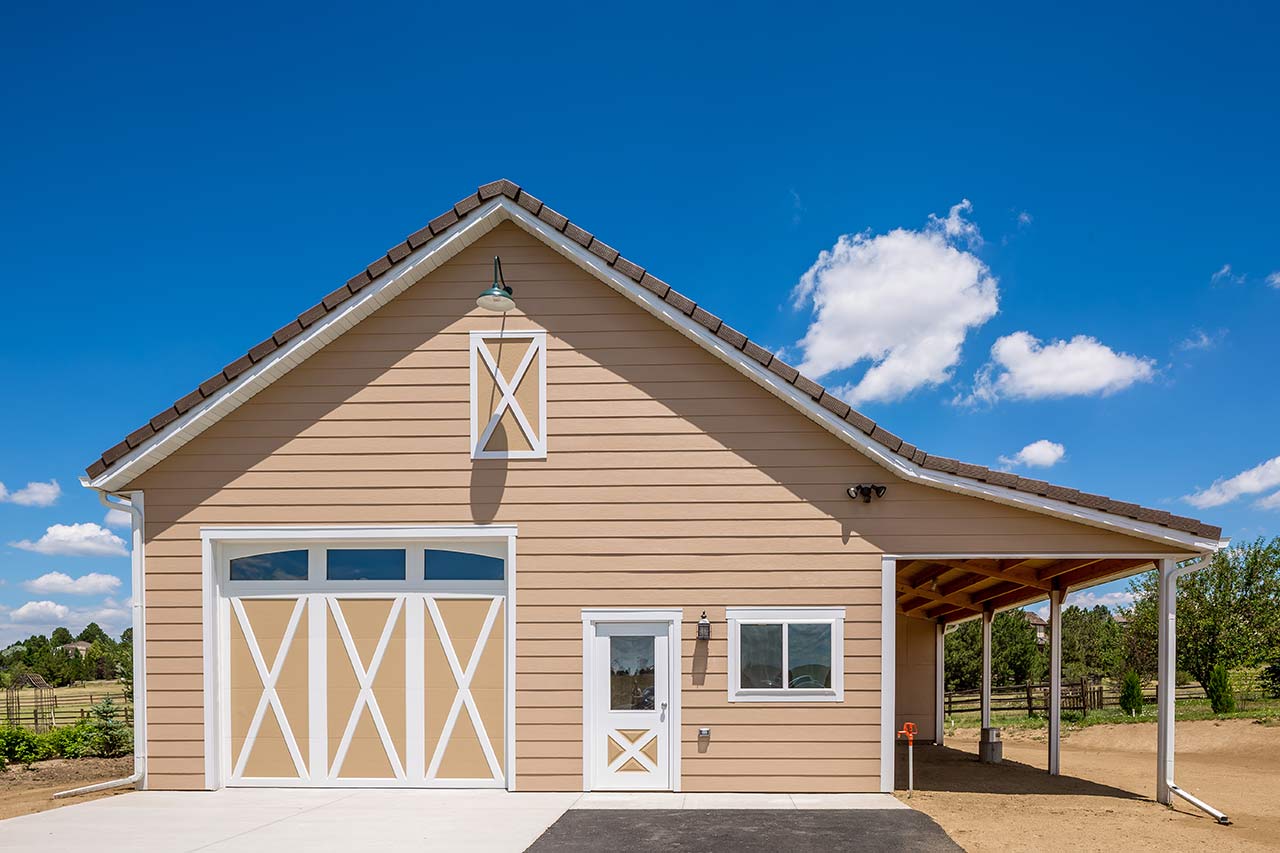
Centennial Colorado Horse Barn with Siding and Carriage Garage Doors to Match Home
Many of our clients want their horse barn to complement the architecture of their home.
We can design barns using a wide variety of exterior finishes including:
- Stone accents
- Lap siding
- Stucco
- Shingles
- Garage doors to match existing home
Any siding that can be used on a home can also be used on a pole barn. A custom horse barn can look like a natural extension of your property.
12. Should I include covered trailer parking?
If you have the space, many horse owners find covered trailer parking to be a worthwhile investment.
Most often, we enclose a lean-to and add garage doors to each end to provide parking for horse trailers, RV’s, hay storage or any other items that would need to be stored in a covered area. During the design process, it’s great information to gather of what you would like in the enclosed parking and how tall the garage doors would need to be in order to use it so we can make sure the clearance of the porch underneath will work for what you need.
Planning trailer storage during the design phase often results in a more functional layout.
13. What upgrades provide the best long-term value?
Some upgrades continue providing value long after construction is complete.
Popular upgrades include:
- Automatic heated waterers
- Water and hydrants to the barn
- Metal ceiling liners
- Tongue-and-groove wall finishes
- Insulation
- Underground Gutter systems (Underground gutter systems help move water away from paddocks and reduce muddy areas around the barn.)
- Lean-to’s (enclosed and open for horses to stand underneath for shade and protection from weather)
- Dutch doors
- Heated tack room
- Wash Stall
- Garage doors vs Sliding doors (Sliding doors, while beautiful, do tend to take beatings from wind and need occasional maintenance and adjustments and do not seal.)
Choosing upgrades that improve daily use often provides the greatest long-term satisfaction.
14. Can I add stalls or interior finishes later?
Yes.
Many clients choose to complete portions of the interior in phases.
Depending on your long-term plans, you may decide to add:
- Stalls
- Wash stall
- Insulation
- Concrete
- Tack room finishes
- Interior liner panels
Planning for future improvements during the initial design can make later additions much easier.
15. What are the biggest mistakes to avoid when planning a horse barn?
After years of designing custom horse barns, we’ve found that many common mistakes can be avoided through proper planning.
Some of the biggest include:
- Building too small or too short
- Not planning for future expansion
- Forgetting trailer and equipment parking
- Underestimating storage needs
- Not planning utilities right away even if they aren’t installed at the build time
- Poor building placement
- Not considering daily workflow
- Placing the barn far away from your home
- Facing runs toward the North
A little extra planning at the beginning often results in a barn that’s easier to use for decades to come.
Ready to Design Your Custom Horse Barn?
Every horse owner has different goals, and every horse barn we build is designed around those needs. Whether you’re planning a small hobby barn, a custom equestrian facility, or a fully insulated horse barn with premium finishes, our team will guide you through the design, permitting, and construction process from start to finish.

0 Comments