
Pole barn vs. stick-built garage in Colorado: What’s the difference?
Both construction methods can work well, however, they are structurally different systems. Understanding those differences can help you choose the right building for your property, budget, and long-term goals.
At Sapphire Construction Inc., we design and build engineered post-frame buildings with the help of Lester Buildings, so below we’ll explain how an engineered post-frame system compares to traditional stick-built construction.
What Is a Post-Frame (Pole Barn) Building?
Modern post-frame construction, often called a “pole barn”, uses large structural columns spaced throughout the building to carry the load. Unlike stick-built construction, it does not rely on continuous load-bearing walls around the perimeter.
With a fully engineered system like Lester Buildings, the structure includes:
- Laminated structural columns designed for load-bearing by using “Glue Laminated (Glulam) formed by gluing together stress-rated lumber laminates. To form long members, the lumber can be joined end-to-end via finger joints, or face-joined or edge-joined to form large cross sections using waterproof adhesive. Glulam is the only engineered lumber that can be formed into curved or other complex shapes.”
- Engineered roof trusses
- Diaphragm-designed steel panels
- Integrated bracing system
- Site-specific engineering for wind and snow loads
Instead of relying on continuous perimeter footings, the load transfers directly through the structural columns into the ground or an engineered pier system.
Why Engineering Matters in Colorado
Colorado is not a mild climate state.
Therefore, buildings in Douglas and Elbert County must be
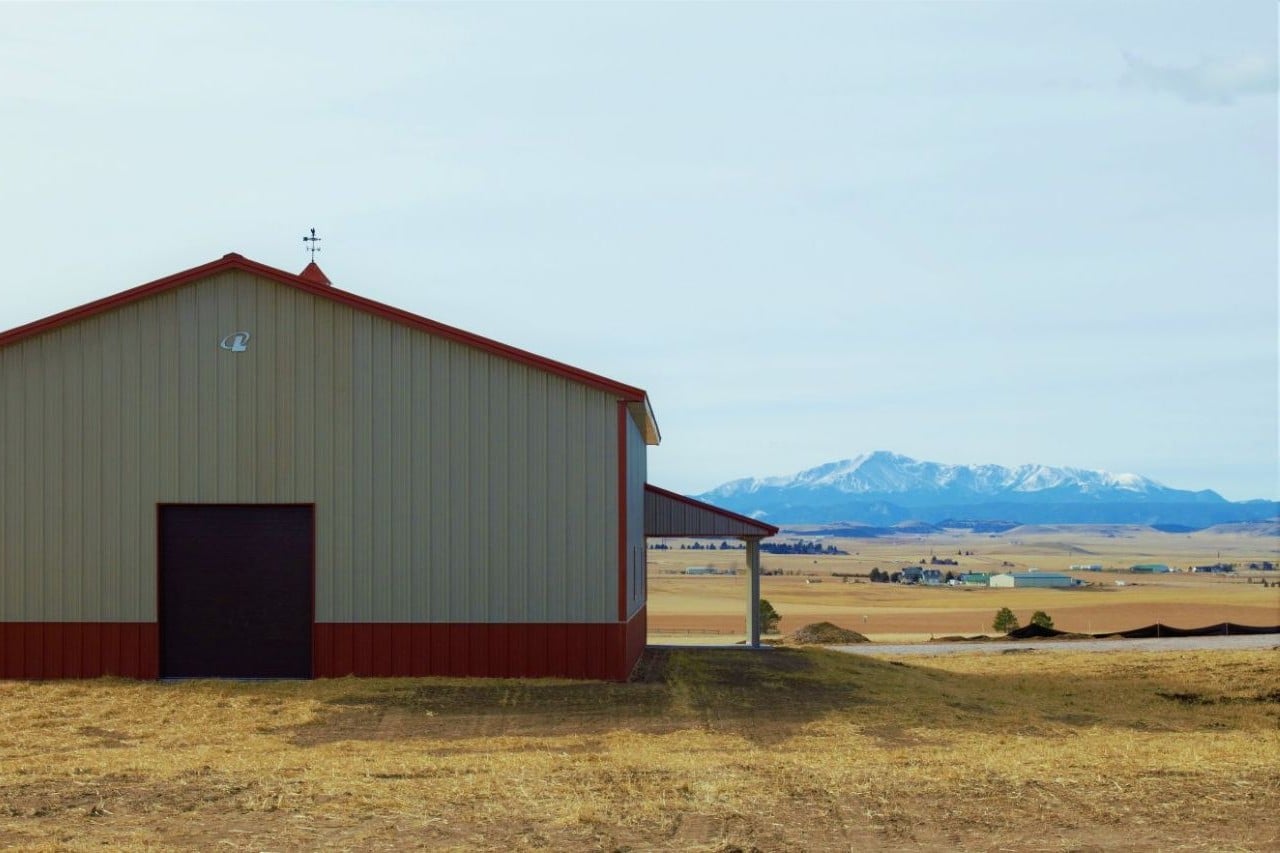
40×60 Pole Barn Garage in Douglas County Colorado
engineered for:
- Snow loads
- High wind exposure
- Uplift forces
A Lester engineered building is designed specifically for your site conditions, not adapted from a generic one-size-fits-all plan.
What Is a Stick-Built Garage?
Stick-built garages are framed using dimensional lumber (typically 2×4 or 2×6 walls) sitting on a continuous concrete footing and stem wall foundation.
In this system, the structural load transfers through the framed walls and into the foundation below frost depth. Consequently, more concrete and excavation are required compared to many post-frame systems.
While this is the same method used for residential homes, it is not always the most structurally efficient system for larger garages or shops.
Foundation Differences
Foundation design is one of the biggest cost variables in Colorado construction.
Post-Frame (Engineered System)
- Structural columns carry the load
- Requires less continuous concrete
- Often more efficient for larger footprints
Stick-Built
- Requires full continuous footing and stem wall
- More excavation
- Higher concrete costs
- More labor-intensive foundation work
As a result, as building size increases, foundation cost differences become more noticeable.
Cost Comparison in Colorado
While pricing varies by size and finishes:
- Post-frame buildings are typically more cost-effective per square foot, especially for larger garages and shops. Around 30′ feet in width is often where post-frame construction becomes meaningfully more cost-effective for the structural shell.
- Stick-built garages can become more expensive as span width increases due to additional structural framing and foundation requirements. Stick-frame is often competitive up to 24-28 feet wide (especially if you are doing a “house-like” exterior and standard 8′-10′ walls), but once you exceed that threshold, post frame becomes a more cost effective option.
For projects like:
- 30×40 garages or larger
- RV storage buildings
- Workshops
- Multi-bay equipment garages
- Hobby barns
An engineered post-frame building often provides stronger structural efficiency for the investment.
Interior Space & Span Capability
Engineered Post-Frame
- Clear-span trusses allow wide-open interiors
- No interior load-bearing walls
- Easier to modify interior layouts later
- Taller sidewalls are more economical
This is especially beneficial for:
- Vehicle lifts
- Large overhead doors
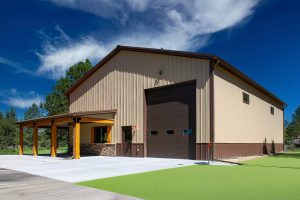
- Equipment storage
- Woodshops
- Indoor arenas

Stick-Built
- May require additional structural headers or interior support
- Less economical for large open spans
- Exterior finishes often cost more per square foot compared to steel siding and roofing systems commonly used in post-frame construction.
Durability & Longevity
When engineered properly, both systems can last decades.
However, a professionally engineered post-frame building:
- Is designed as a complete structural system
- Accounts for snow, wind, and uplift loads
- Includes manufacturer-backed engineering
- Is reviewed and stamped for permitting
Ultimately, in Colorado’s climate, engineering is not optional, it’s critical.
Appearance: Modern Post-Frame Is Not Agricultural
There is a common misconception that pole barns look strictly agricultural.
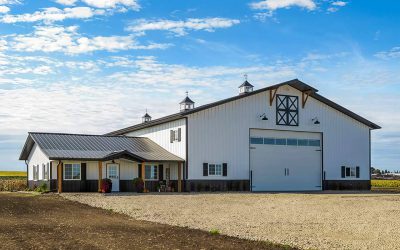
Modern engineered post-frame garages can include:
- Residential-style insulated overhead doors
- Wainscot
- Covered porches
- Cupolas
- Stone accents
- Custom windows
- Color-matched steel systems
- Ultimately, with the right design, a post-frame garage can complement your home and increase property value.
When Does Each Make Sense?
An Engineered Post-Frame Garage May Be the Better Choice If:
- You want larger open spans
- You need taller door openings
- You are building a shop or multi-use structure
- Budget efficiency per square foot matters
- You want a professionally engineered system
A Stick-Built Garage May Make Sense If:
- It is being integrated directly into an existing home structure (when attaching structures, matching the foundation of the existing home to the new structure is important.)
- HOA requirements mandate matching the home exactly (which can also be accomplished with post-frame buildings)
- The footprint is small and simple
Final Thoughts: The Right Building Depends on Your Goals
There is no one-size-fits-all answer.
The right choice depends on:
- Intended use
- Budget
- Site conditions
- County requirements
- Long-term plans
If you are planning a garage or shop in Douglas or Elbert County, we can help you understand which structural system makes the most sense for your property.
Every Lester building we design is engineered specifically for Colorado conditions and reviewed for permitting compliance.
If you’d like to discuss your project, we’re happy to walk through options and answer questions.

0 Comments