
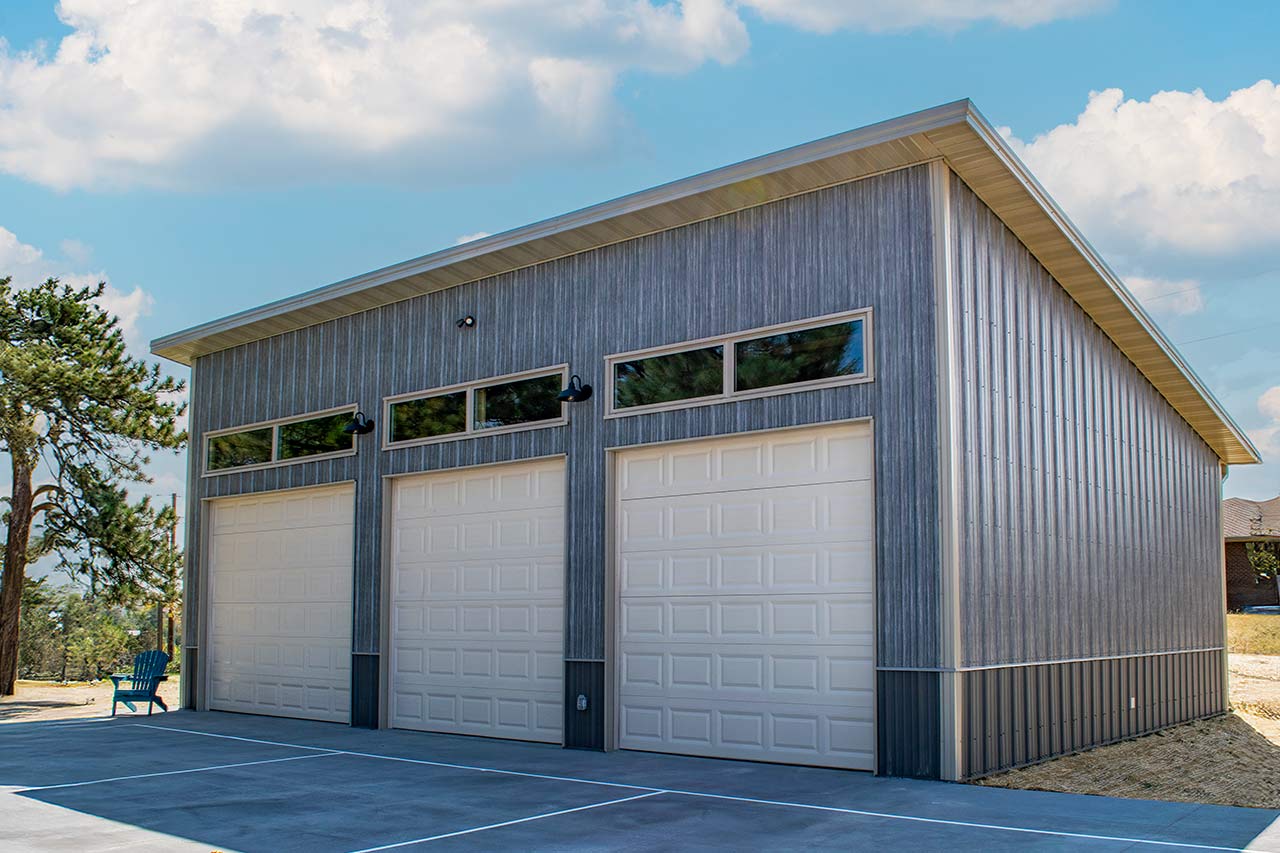
Planning a Pole Barn Project in Douglas County, Colorado
Planning a pole barn project in Douglas County requires more than choosing a building size and layout. Homeowners must consider zoning regulations, HOA requirements, site grading, driveway access, and utility locations before construction can begin.
Fortunately, understanding these requirements early can prevent delays and unexpected costs. In this guide, we explain the most important steps involved in planning a pole barn project in Douglas County so homeowners can move forward with confidence.
Step 1: Check Zoning Regulations First
The first step in planning a pole barn project in Douglas County is understanding your property zoning.
Douglas County zoning determines:
- Allowed building uses
- Required setbacks
- Size and height limits for accessory buildings
- Restrictions based on existing structures
Homeowners can start by locating their property on the Douglas County zoning map using their address.
After finding the zoning designation, you can review the requirements that apply to your property.
These regulations often include:
- Minimum setbacks from property lines
- Maximum building size
- Allowed accessory structures
Because zoning rules vary by property, many homeowners call Douglas County Planning and Zoning directly. By providing your address, the planning department can confirm:
- Setback requirements
- Building size restrictions
- Allowed uses based on existing structures
This step helps prevent costly design changes later in the process.
Understanding Garage Size Limits in Douglas County
Many residential properties in Douglas County have restrictions on detached garages and accessory buildings.
For example, some properties allow:
- A maximum of two detached garages
- 3,000 square feet total combined garage space
Because of these limits, the classification of the building matters. A structure designed as an agricultural building may follow different rules than a detached garage.
Therefore, confirming the zoning requirements early can help homeowners choose the right building type and size.
Step 2: Review HOA Restrictions
If your property belongs to a homeowners association, the HOA may have additional requirements.
In many cases, HOA restrictions are stricter than county regulations.
HOA guidelines often include:
- Larger setbacks
- Building envelopes that limit where structures can be placed
- Maximum building sizes
- Exterior material requirements
- Roof pitch requirements
- Approved color palettes
Because HOA approval usually comes before the building permit, homeowners should review these requirements early in the planning process.
This step ensures the building design meets both HOA and county requirements.
Step 3: Choose the Best Location on Your Property
After reviewing zoning and HOA requirements, the next step is selecting the best location for the pole barn.
In most cases, placing the building closer to the home creates better access and daily convenience.
For example, homeowners often use pole barns to store:
- Vehicles
- Trailers
- Campers
- Equipment
- Horse tack or supplies
Therefore, a building located far from the home may limit how often it gets used.
Choosing a convenient location often improves both functionality and long-term value.
Step 4: Plan for Vehicle Access and Turnaround Space
Access planning plays a major role in pole barn placement.
First, homeowners should consider the vehicles and equipment that will enter the building.
Common examples include:
- Trucks
- Horse trailers
- RVs and campers
- Tractors and equipment
If the building includes a pull-through design, the site must allow enough room for vehicles to safely enter, exit, and turn around.
A helpful rule of thumb is allowing about three feet of clearance around vehicles when planning drive-through space behind the building.
Additionally, leaving enough turning radius near doors improves everyday usability.
Step 5: Evaluate Dirt Work and Drainage
In Douglas County, dirt work often plays a major role in pole barn projects.
Many properties are not flat, so builders frequently need to create a level building pad.
This process may include:
- Cut and fill grading
- Bringing in additional fill dirt
- Building up the pad elevation
- Douglas County also requires 10% drainage away from the building foundation. This requirement helps prevent water from collecting around the structure.
Because of this rule, some building sites require additional grading or fill material.
Planning for drainage early helps homeowners avoid surprises during construction. You can review the DESC (Drainage, Erosion, Soil, Control) standards here.
Step 6: Consider Trees, Scrub Oak, and Fire Mitigation
Many properties in Douglas County include mature trees or areas of scrub oak.
When choosing a pole barn location, homeowners should consider the vegetation around the building site.
For example:
- Trees may need removal or relocation
- Scrub oak may require clearing
- Vegetation around the structure must meet fire mitigation requirements
Douglas County encourages homeowners to clean up tree drip lines and dense vegetation around structures to reduce wildfire risk.
Therefore, clearing vegetation around the building site may become part of the preparation work.
Step 7: Understand Driveway and Access Requirements
If the building location sits far from the existing driveway, homeowners may need to build a new access road.
Douglas County has specific requirements for access roads, including:
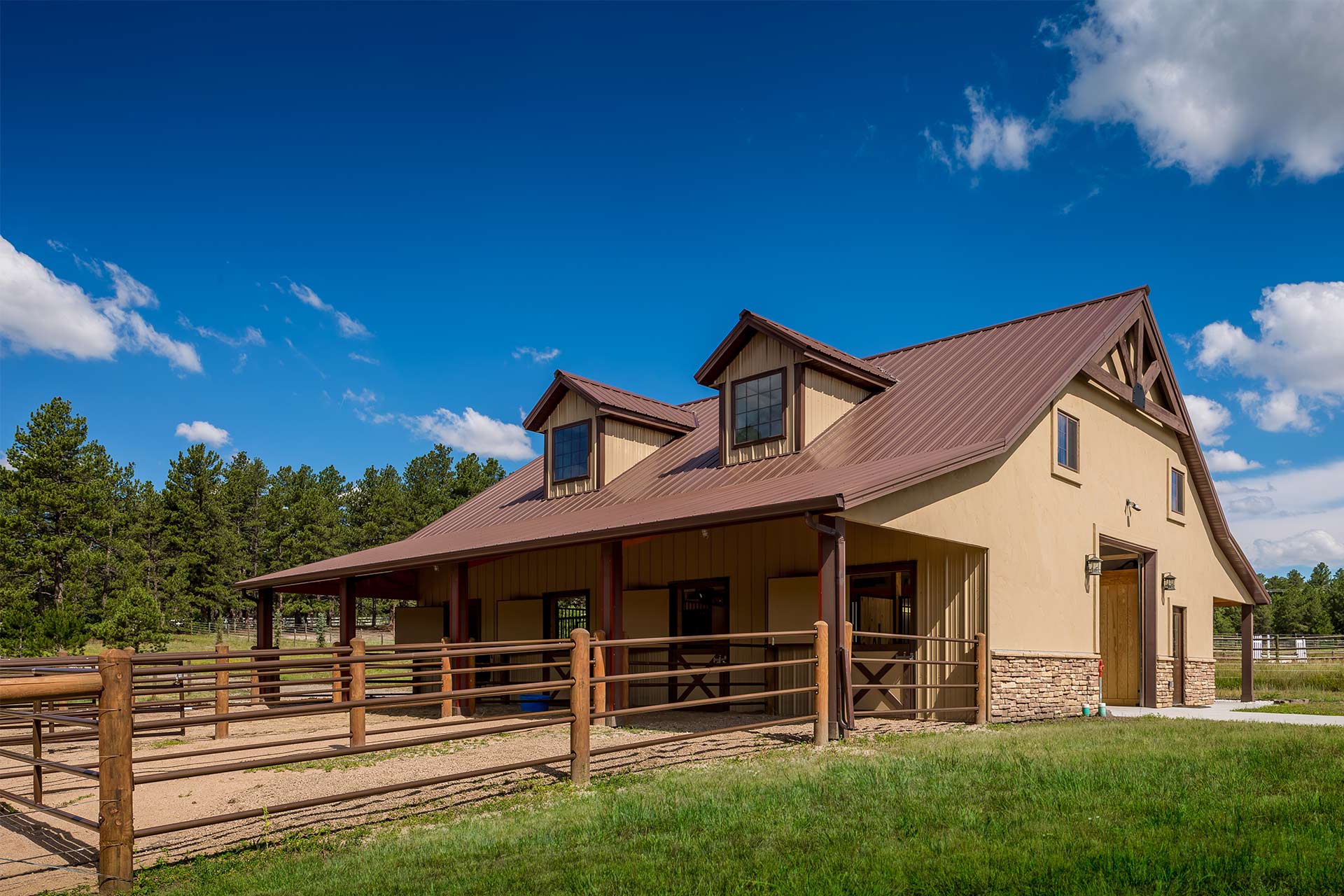
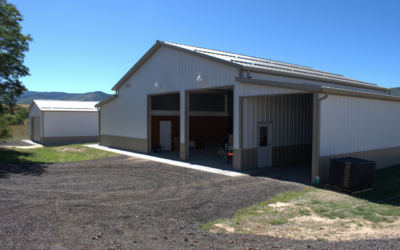
Horse Barn in Parker, CO
- Minimum driveway width
- Road base standards
- Turnaround areas
- Hammerhead turnarounds for emergency access
These requirements ensure emergency vehicles can safely reach the structure.
Because access roads can add cost to a project, homeowners should evaluate driveway planning early in the design process.
Step 8: Plan for Utility Connections
Utility access also affects where a pole barn should sit on the property.
If the building will include:
- Electricity
- Water
- Gas
Placing the building closer to existing utilities can significantly reduce installation costs.
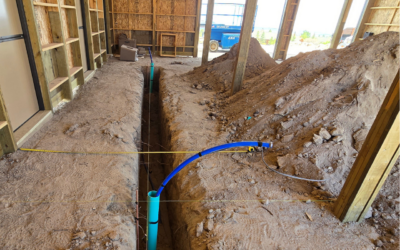
Running utilities long distances across a property often requires additional trenching and materials.
Therefore, homeowners often choose a building location that keeps utility connections simple and efficient.
Step 9: Leave Extra Space From Property Lines
Finally, homeowners should consider leaving extra space beyond the minimum setbacks.
While zoning regulations define the minimum required distances, additional space often improves flexibility during construction.
Extra space can also:
- Reduce the need for a formal survey
- Improve access around the building
- Allow room for drainage and maintenance
Therefore, planning slightly larger setbacks can make the construction process easier.
Frequently Asked Questions About Pole Barns in Douglas County
Do I need a permit to build a pole barn in Douglas County?
Yes. Douglas County requires a building permit for pole barns, garages, and other accessory structures.
The permit process typically includes:
- Building plans and engineering
- Zoning review
- Soil erosion control review
- Inspections during construction
Because requirements vary depending on the property and zoning, homeowners often contact Douglas County Planning and Zoning before starting their project.
What are the setback requirements for pole barns in Douglas County?
Setback requirements depend on the zoning designation of the property.
Setbacks determine how far a structure must sit from:
- Property lines
- Roads
- Easements
Because every property can have different zoning, homeowners should check the Douglas County zoning map or contact the planning department with their address to confirm the required setbacks.
How big can a detached garage be in Douglas County?
Many residential properties in Douglas County have limits on detached garages.
A common restriction allows:
- Up to two detached garages
- 3,000 square feet total combined garage space
However, zoning rules can vary by property. Some agricultural or rural zoning designations may allow larger structures.
Checking zoning early helps determine the best building size for your property.
Can an HOA prevent me from building a pole barn?
Yes, some HOAs restrict accessory buildings.
HOA guidelines may regulate:
- Building size
- Setbacks
- Exterior finishes
- Roof styles
- Building location
Because HOA rules can be stricter than county regulations, homeowners should review their HOA guidelines before beginning the design process.
Do pole barns require a lot of dirt work in Douglas County?
In many cases, yes.
Douglas County properties often require grading to create a proper building pad, drainage as well as re-seeding disturbed dirt.
Site preparation may include:
- Cut and fill grading
- Importing fill dirt
- Creating drainage slopes
Douglas County also requires all new structures to follow the DESC program, which helps prevent water accumulation around the structure.
What is the best location for a pole barn on my property?
The best location often depends on access, utilities, and terrain.
Many homeowners choose a location that is:
- Close to the home
- Easy to access with vehicles
- Near existing utilities
- Located on relatively flat ground
Planning the location carefully helps improve the functionality of the building and reduce construction costs.
Planning a Pole Barn in Douglas County
The planning of a pole barn project in Douglas County requires thoughtful preparation.
By reviewing zoning regulations, evaluating site conditions, and planning access carefully, homeowners can avoid delays and design a building that works well for their property.
Every property presents different challenges. However, taking time to evaluate these factors early helps ensure a smoother permitting and constr uction process.
Homeowners who plan ahead often save both time and money while creating a pole barn that fits their long-term needs.
Need Help Planning a Pole Barn Project?
Sapphire Construction Inc. specializes in designing and building Lester Buildings throughout Douglas and Elbert Counties.
Our team helps homeowners navigate zoning requirements, site planning, and building design so their pole barn project fits both county regulations and their property goals.
If you are considering building a pole barn, garage, or horse barn, can help you take the next step.
0 Comments